Airgun Targets: How to Choose the Right Type
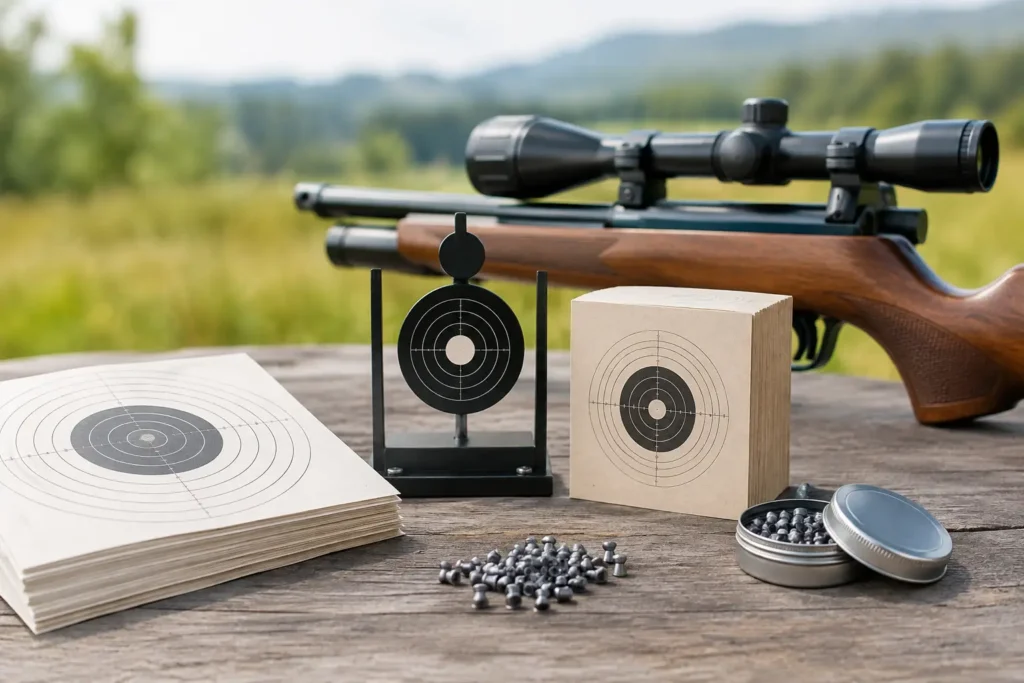
A pellet that misses the target does not simply disappear. It can damage a fence, skip off a hard surface, or leave your range with more energy than expected. That is why choosing airgun targets starts with the whole shooting setup: the gun, the distance, the target, and the backstop behind it.
For a new airgun owner, a paper bullseye and a cardboard box may seem adequate. Sometimes they are. But as power levels rise and shooting goals change, the target system needs to do more work. A good setup gives clear feedback, contains pellets reliably, and makes practice worth repeating.
Start With Your Shooting Goal
The right target depends on what you are trying to improve. If you are zeroing a scope or checking group size, you need precise aiming marks and an easy way to measure hits. If you are teaching a young shooter safe gun handling, immediate visual feedback can keep the session engaging. If you are preparing for small-game hunting or field target competition, realistic kill-zone targets and varied distances may have a place.
There is no single best target for every airgun. A low-power .177 pellet rifle used at 10 yards creates different demands than a high-powered PCP rifle at 40 yards. Caliber matters, but muzzle energy, pellet construction, angle of impact, and the condition of the target matter too.
Before buying anything, decide where you will shoot and how far. A garage, basement, backyard, and formal range each impose different limits. A controlled indoor lane makes paper targets and a pellet trap practical. An outdoor space may support reactive or field-style targets, provided there is a proper backstop and a safe direction of fire.
Paper Airgun Targets for Accuracy Work
Paper targets remain the most useful starting point for most shooters. They are inexpensive, easy to store, and precise enough for zeroing open sights, red dots, and scopes. Standard bullseyes make it simple to see whether a group is centered, while grid targets help measure adjustments after changing elevation or windage.
Use paper when the question is, “Where are my pellets landing?” A target with multiple small bulls can stretch one sheet across several groups and prevent a ragged hole from hiding your results. For close-range practice, smaller aiming dots often reveal more than a large bullseye. They force consistent sight alignment and make small changes easier to spot.
Paper does require a trap or backer. A purpose-built pellet trap is the cleanest option for modest-power guns, but it still must be rated for the airgun you are using. Put a dense, stable backstop behind it rather than assuming the trap alone is enough. Replace damaged paper and inspect the trap regularly. Pellets accumulated inside a trap contain lead, so wash hands after handling targets or cleaning the area.
Cardboard is useful as a backing material, not as the only stopping surface. A pellet can pass through thin cardboard with little resistance. The target face tells you what happened. The backstop is what keeps the session contained.
Steel Targets Deliver Useful Feedback
Steel targets give a satisfying report when hit. That sound is more than entertainment: it confirms an impact without requiring the shooter to walk downrange after every shot. Spinner targets, resettable paddles, and swinging silhouettes are popular for plinking because they make repetition more engaging.
The trade-off is safety. Steel must be designed and rated for airgun use, and it should be positioned so pellets are directed downward into a suitable backstop. Flat, hardened target faces can still create fragments or unpredictable ricochets when used at the wrong distance, with excessive power, or when the target is damaged. Never shoot steel that is deeply pitted, cracked, loose, or angled to send impacts toward the firing line.
Follow the target manufacturer’s distance and energy guidance. As a practical rule, more powerful airguns require greater distance and more conservative target selection. Avoid using improvised steel, such as old cans, scrap metal, or hardware-store plates. They are inconsistent, often sharp after impact, and provide no reliable energy rating.
A steel target is best when you already have a real backstop and want quick confirmation of solid hits. It is not a substitute for a backstop. A missed shot still needs somewhere safe to go.
Reactive Targets Make Practice Easier to Read
Reactive targets show a hit by falling, spinning, breaking, changing color, or exposing a new plate. They can make practice sessions more productive, especially for beginners who need an obvious result after each careful shot.
Knockdown silhouettes and resettable targets work well for drills. Place several at different heights or distances, then shoot them in a deliberate order. This adds position changes, sight acquisition, and trigger control without turning practice into random shooting.
Breakable targets can also be fun, but they create cleanup and should only be used where fragments are fully contained. Avoid glass, pressurized containers, and household items. They are not designed as targets, and they bring unnecessary hazards to an activity that is already easy to do safely with purpose-built equipment.
For backyard shooting, reactive does not always mean better. A paper target may be the smarter choice if neighbors are close, the available backstop is limited, or you need to verify group size rather than simply count hits.
Field Targets Build Realistic Skills
Field targets use metal animal silhouettes with a defined hit zone. A pellet through that zone releases a mechanism that drops the target. A pull cord or reset system raises it again. They are designed to reward accurate shot placement rather than a general hit anywhere on the face.
These targets are useful for shooters interested in field target competition, pest-control-style practice, or hunting-oriented accuracy. They help develop range estimation, holdover, and positional shooting. Yet they are not necessary for every airgun owner. A shooter who has not established a safe zero on paper will get more value from basic target work first.
When setting field targets, consider the terrain and firing angle carefully. A target placed low against a substantial earth backstop is usually easier to manage than one perched against open sky. Keep the reset cord clear of the firing line, and inspect the mechanism before shooting. A target that fails to reset can tempt someone to walk forward before the gun is made safe.
Build the Range Around the Backstop
The backstop is the foundation of any target choice. Its job is to stop pellets that pass through, miss, or ricochet away from the intended target. The safest material and design depend on airgun energy and the location, but the principle is constant: use a substantial, purpose-suited barrier with a safe area beyond it.
Natural earth berms are often effective outdoors because they absorb energy and direct impacts downward. Indoors, a rated pellet trap with additional dense backing may be appropriate for lower-energy shooting. Avoid water, hard concrete, stone, exposed wood, and smooth metal surfaces. They can cause skips, bounce-backs, or inconsistent deflection.
Keep the firing lane controlled. Make sure no person, pet, road, trail, window, or occupied structure can enter the line of fire or the area beyond the backstop. Establish a clear rule that no one goes forward until every airgun is unloaded, pointed in a safe direction, and set down or secured.
Protect Airgun serves shooters who want specialist guidance rather than a mass-market guess. The same practical standard applies whether you are selecting a target or a rifle: match the equipment to the job, then verify the setup before the first shot.
A Simple Rotation Keeps Practice Productive
One target type can become repetitive. A useful session often starts with paper to confirm zero and settle fundamentals, then moves to a reactive target for controlled drills. Finish with a few paper groups again. That last check shows whether the day’s faster shooting improved control or introduced bad habits.
Keep a small record of distance, pellet type, sight setting, and group size. Airguns can be sensitive to pellet choice, and notes prevent you from repeating the same guesswork next weekend. If accuracy suddenly changes, inspect the target setup, mounts, screws, and barrel condition before blaming the shooter.
The best airgun target is the one that gives honest feedback while keeping every shot contained. Start with a safe backstop and paper targets, add steel or reactive options when the range supports them, and let your actual shooting goals determine what comes next.